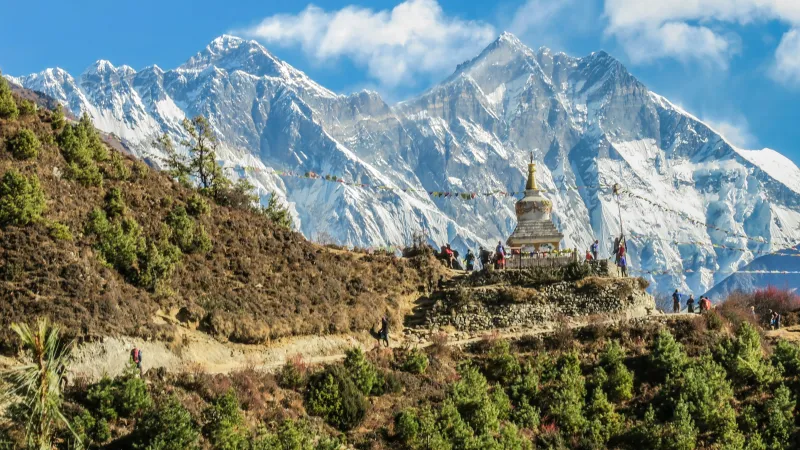
Most people head into the Khumbu region with their eyes locked entirely on the sky, chasing a single number: 8,848.86 meters. They want to stand at the foot of the world’s tallest peak, to feel the raw, rocky grit of Everest Base Camp under their boots, and to witness the sunrise ignite the jagged crown of Kala Patthar.
But if you only measure the Everest trail by its altitude, you miss the very magic that sustains it.
Beyond the thin air and the dramatic suspension bridges swinging over the roaring Dudh Koshi River, the journey through the Khumbu is fundamentally a spiritual pilgrimage. It is a trail shaped by ancient glaciers, guarded by the legendary Sherpa people, and softened by the continuous, rhythmic hum of Tibetan Buddhism.
The Gateway in the Amphitheater: Namche Bazaar
After a thrilling flight into Lukla and a demanding, calf-burning climb through pine-scented forests, the trail opens up into Namche Bazaar (3,440m). Shaped like a massive horseshoe carved directly into the mountain face, this vibrant trading hub is the beating heart of the region.
While Namche offers modern comforts—like heated teahouse dining rooms, bakeries serving fresh apple pie, and gear shops—it remains deeply rooted in tradition. As dawn breaks over the amphitheater, the sounds of the town slowly emerge: the soft chiming of bells around the necks of passing dzo convoys, the low murmur of elders spinning the brass prayer wheels at the town entrance, and the fluttering of hundreds of five-colored prayer flags sending blessings out into the mountain wind.
The Spiritual Sanctuary: Tengboche Monastery
Leaving Namche, the trail snakes along high, windswept ridges before plunging into silver birch and rhododendron forests, only to climb steeply once again toward Tengboche (3,867m).
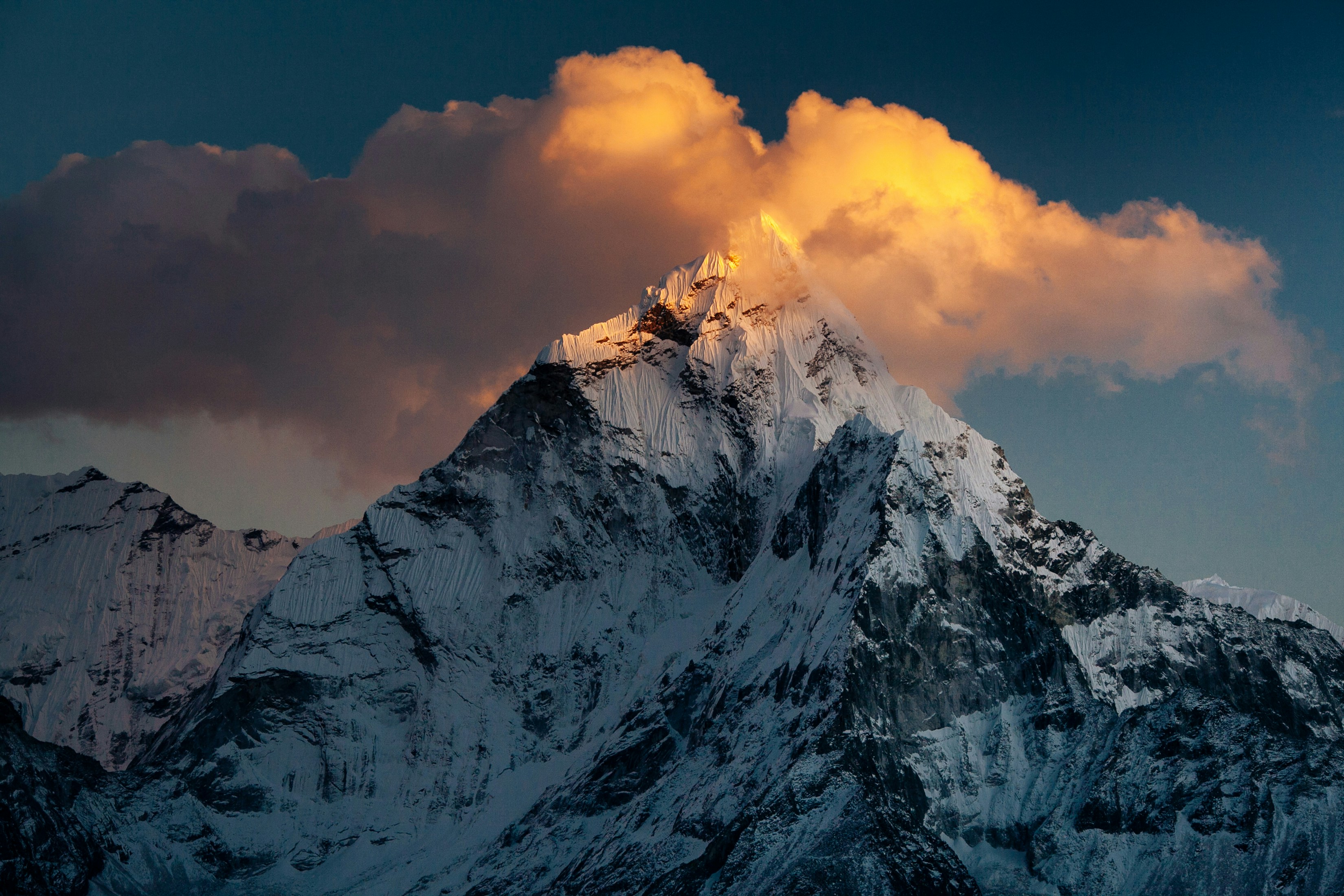
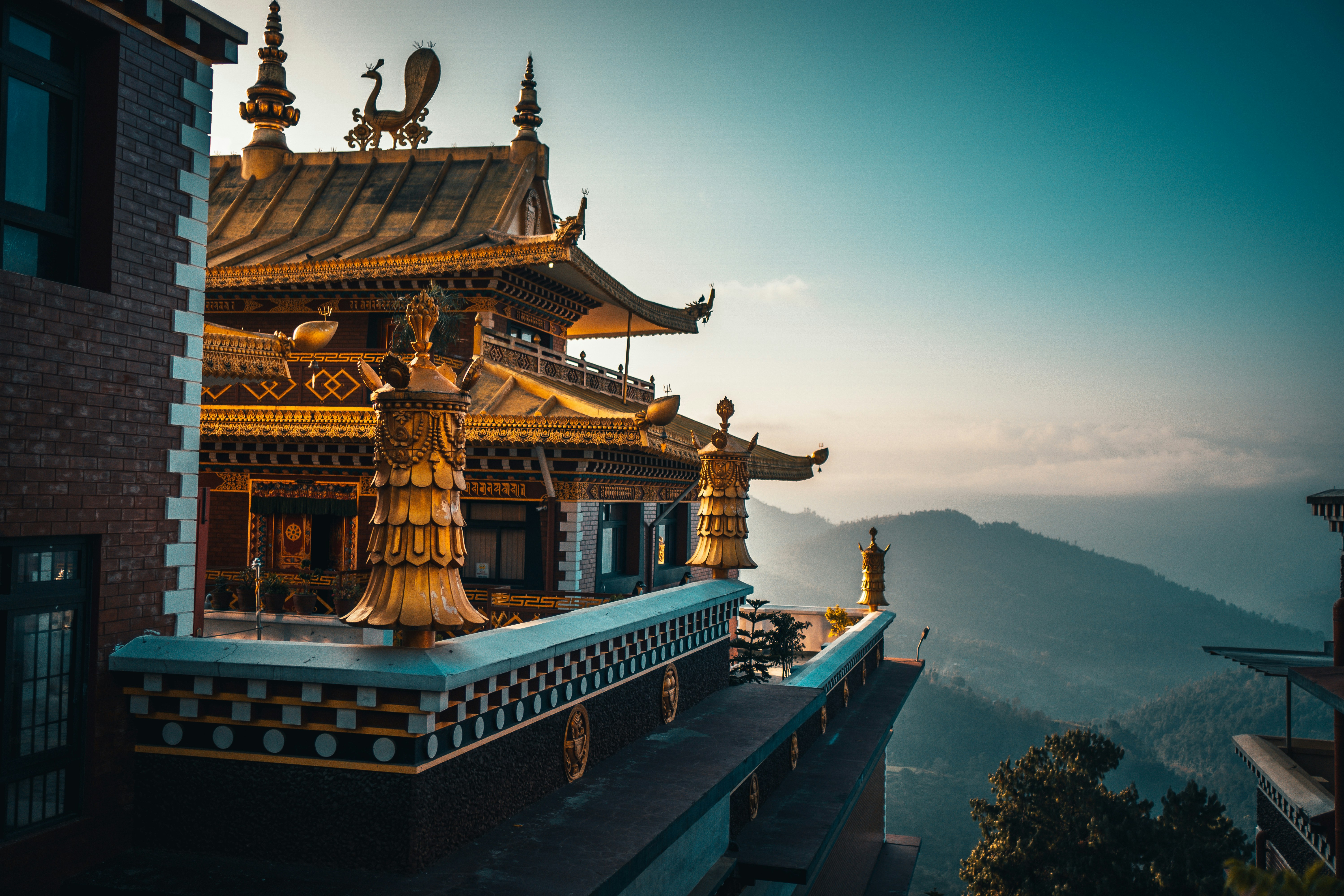
Perched on a high ridge against a backdrop that defies reality, the Tengboche Monastery stands as the spiritual sanctuary of the Khumbu. When you look up, the immense, soaring south face of Lhotse and the sharp, elegant pyramid of Ama Dablam frame the monastery perfectly.
Stepping inside the dim, incense-scented main hall during the evening puja (prayer ceremony) is a grounding experience. Sitting on a low wooden bench while the monks chant in deep, resonant tones and blow traditional long horns makes the biting alpine cold outside melt away. Here, the mountains aren't just blocks of stone and ice to be climbed; they are Chomolungma—the Goddess Mother of the Earth—deities to be deeply respected.
The Land of Ice: The Khumbu Glacier
As you push past the tree line and leave the last shrubs of juniper behind, the landscape shifts into something raw, lunar, and beautifully severe. Walking between Lobuche and Gorak Shep, you find yourself tracking the lateral moraine of the Khumbu Glacier, the highest glacier on Earth.
This is a landscape in constant, slow motion. The trail crosses fields of tumbled boulders, gray glacial silt, and massive, otherworldly ice towers. Standing near the edge, you can occasionally hear the deep, muffled groan of moving ice or the distant rumble of shifting rock. It is a stark reminder of nature’s sheer, uncensored power—and how small we are in comparison.
Three Mindful Habits for the Trail
- Clockwise is the Way: Whenever you encounter a mani stone (boulders intricately carved with Buddhist mantras) or a chorten along the trail, always walk past it keeping it on your right-hand side. It’s a traditional sign of respect that aligns your movement with the turning of the earth.
- Step Aside for the Heavy Haulers: Yaks and dzos have the absolute right of way. When you hear their bells jingling behind you, always step off the trail on the wall side—never the cliff side—to let them pass safely.
- Hydration Over Haste: The golden rule of high-altitude trekking is to move at a bistarai (slowly, slowly) pace. Drinking 3 to 4 liters of water daily and refusing to race up the ridges is the absolute best insurance against altitude sickness.
The Khumbu changes every traveler who enters it. Long after you return home, when the dust has been washed from your boots and your muscles have recovered, it’s not the physical struggle you’ll remember most—it’s the profound stillness of the high valleys and the warm hospitality of the people who call the roof of the world home.